| | |
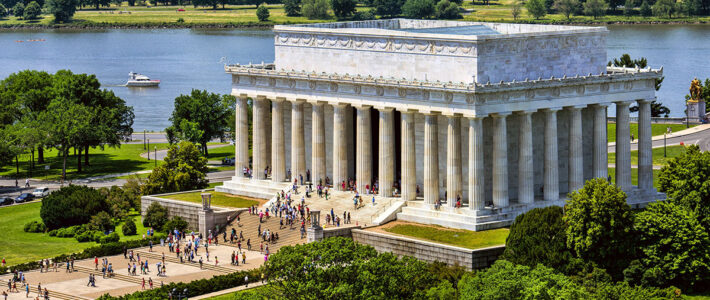
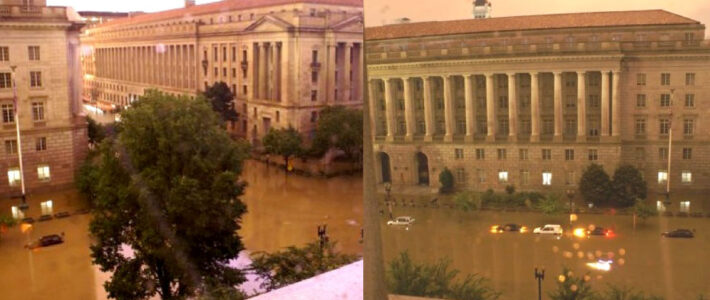
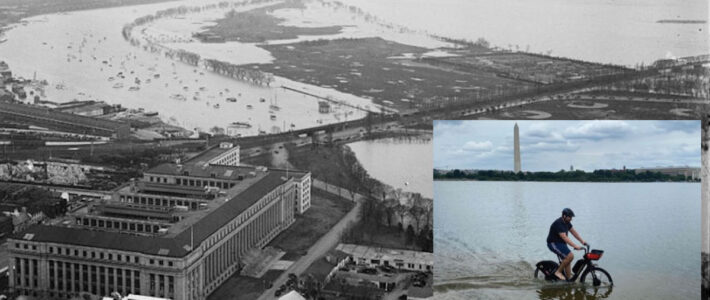
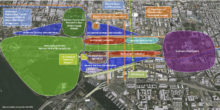
| October 22, 2009 Dear Coalition Friends: With Congress providing much-needed funding for Mall repairs, the National Park Service is developing plans for the rehabilitation of the Lincoln Memorial Reflecting Pool. The project includes repairing leaks in the Pool, improving the quality of the water, adding paved walkways along its length where pedestrians have created a pathway, reconditioning the walks under the elms, as well as completing security and adding ADA accessible ramps to connect the Lincoln Memorial plaza to the Reflecting Pool below. The National Coalition to Save Our Mall fully supports Pool rehabilitation and has been participating in the public consultation on this project. We have proposed what we believe is a more sustainable, less costly alternative to the Park Service's proposal. Our suggestions, submitted last week to the National Park Service, and copied to Secretary of Interior Salazar and oversight committees in Congress, include an alternative approach to water filtration and walkway improvements: new, granular surface walkways under the elms lining the Pool (instead of re-paving); self-cleaning bio-filtration (instead of pumping Potomac River water into the Pool and discharging it weekly into the Tidal Basin); and use of fountains to add oxygen to the water and help keep the Pool clean. We believe the Reflecting Pool project should be a model of sustainability and an example for future rehabilitation projects throughout the Mall. We copy our letter below, without illustrations. To see the letter with illustrations, including Hermann Park in Houston, Texas, and a simulation of fountains in the Reflecting Pool, click here on our website http://www.savethemall.org and, in the right hand column under "What's New," click on "Coalition offers sustainable alternative for Lincoln Reflecting Pool." As supportive as we are of this new attention to the National Mall, we are concerned that this and other repair projects are being developed as isolated plans, instead of elements of a comprehensive, long-range vision for the entire Mall -- and all jurisdictions including the Smithsonian, National Park Service, Capitol grounds, White House, US Department of Agriculture, National Gallery of Art -- , a cause we have been championing for 5 years. More than ever, as public funds become available for major Mall projects, planning principles and design guidelines are needed to ensure coherent development and improvements throughout the Mall to last the next 50 years and beyond. These Mall-wide guidelines do not now exist. The National Park Service has been working on a maintenance plan for its portion of the Mall since 2006, but according to a Park Service spokesman quoted in today's paper "a final version is at least two years away from approval" In other news, the Vietnam Veterans Memorial Fund is undertaking repairs at the Vietnam Veterans Memorial, as reported by the Associated Press. Our letter regarding the Reflecting Pool: October 13, 2009 Perry Wheelock RE: Lincoln Memorial Reflecting Pool Rehabilitation Dear Ms. Wheelock: The National Park Service asked for comments on the Lincoln Memorial Reflecting Pool Rehabilitation as part of the National Historic Preservation Act Section 106 public consultation process. We appreciate the opportunity to submit the following remarks. The National Coalition to Save Our Mall, a non-profit national organization advocating long term, comprehensive planning for the entire National Mall, is pleased to whole-heartedly support the National Park Service proposed restoration and rehabilitation of the Lincoln Memorial Reflecting Pool and Grounds. We continue to point out, as we have previously, that separate, piecemeal improvement projects such as this should be guided by a larger, comprehensive plan for the National Mall, in the tradition of the L’Enfant and McMillan Plans. This is critically important because choices made regarding paving materials, lighting, landscaping, and so on will have an impact on the design integrity of the entire Mall for the next fifty years. Today, instead, the National Park Services relies on Park Service Cultural Landscape studies that treat the Mall as a collection of separate and unrelated memorial landscapes (colored areas shown at right) and do not recognize the McMillan Plan as the historical blueprint for the National Mall. Without a comprehensive plan, the National Park Service, as well as the review agencies, lack Mall-wide standards and design principles to guide coherent decision-making. With regard to this rehabilitation project, as a major restoration project directly on the Mall’s main symbolic axis, this project must be exemplary in all aspects from planning to implementation. Above all, it should be a model of sustainability, in keeping with the Obama Administration’s goals. This means using natural systems to create a sustainable environment whenever possible. The current proposal does not begin with that goal and, as yet, shows little attention to sustainable concerns. Other alternatives must be considered. Parks around the country provide models. We propose that several alternative approaches be considered. Granular surface elm walkways Stabilized granular paving is being used very effectively in completely accessible public spaces in other cities. While the hard paving along the pool edges will serve as an alternate route for pedestrians who prefer firmer paving, making the shaded walk an ideal place for a more naturalistic paving material will offer a change of pace for pedestrians on a scorching hot summer day. With enough benches along the way, visitors will find this a welcoming new experience. Permeable paving systems have been used in at least three award winning park installations and have performed well for years: Pier A Park in Hoboken, NJ, Metrotech Park in Brooklyn, NY and Hermann Park in Houston, TX, shown at right. The use of a granular paving system, as opposed to 4,000 feet of paved walkway, should lower the capital cost of this element. Self-cleaning bio-filtration We suggest that a seventh option be added, a proven self-cleaning bio-filtration system, designed to operate without tapping the Potomac River, or employing ultrasonic devices to kill algae (and put other aquatic life at risk). A reflecting pool that cleans itself, using fish and other natural systems, is certainly to be preferred. Also, such a system should have a much lower capital cost than the options presented to date. Again, the award winning Hermann Park, TX pool, provides a prototype for this system. This Reflecting Pool is half as long as the Lincoln Reflecting Pool, but similar in configuration. We have spoken at length with the designers. Full operational information can be obtained through the Hermann Park Conservancy or the design team, the SWA Group. Fountains Fountains are more than decorative features. They are the classic way to add oxygen into the water, and would help keep the pool clean. Lighting Continuous pedestrian pathways There are two other issues that are not addressed by NPS. While they may be considered to be outside the program limits of this project, they are basic to the functioning of this area: flood protection and public use. Flood protection Public use We hope that the Reflecting Pool, and its grounds, can be developed in the 21st century to be a not only an accessible and secure environment, but one that is evolving with the national desire to utilize natural “green” systems as often as practical. This project can show the way for the long-term sustainable development of the whole Mall. We believe that these suggestions also would be useful in controlling cost, an issue that has not been included in any of the material furnished to the public to date. We are prepared to provide additional materials regarding these ideas and the model parks mentioned in our comments. Please contact Kent Cooper at 202-338-3442 or w.kent.cooper@verizon.net. For the National Coalition to Save Our Mall, Judy Scott Feldman, PhD |
|
Copyright © 2008 National Coalition to Save Our Mall Inc. All Rights Reserved |