NATIONAL COALITION TO SAVE OUR MALL
113 N. Washington St., #479 Rockville, MD 20850 www.savethemall.org (301) 340-3938
COMMENTS ON THE NCPC’S
URBAN DESIGN AND SECURITY PLAN
September 17, 2002
The National Coalition to Save Our Mall welcomes NCPC’s attempts to establish a Security Master Plan for Washington in order to replace the temporary security measures that convey a sense of fear and a fortress mentality. The Plan is still, in our view, a work in process. We urge NCPC not to adopt the Security Plan yet or send it to the President.
GENERAL:
The Plan still needs:
1. A system for judging the security need for each building or site that includes threat assessment; prioritization of threat (Is the threat to a monument comparable to that to an occupied government building?); a variety of responses; and a variety of design responses (following Cultural Landscape Report design guidelines for the National Mall, when applicable).
2. Consideration of Historic Preservation protections and guidelines for historic buildings and sites; for L’Enfant streets and circles (L’Enfant Plan is listed in the National Register); and for designs for Pennsylvania Avenue (Capitol to 15th St.) are based on PADC designs which still need to be reviewed and approved by DCHPO.
3. Clear provision for Public Section 106 process and NEPA, including review of Security Plan principles and framework; review of individual design solutions as need arises to implement Plan; involving the Advisory Council on Historic Preservation to ensure compliance; involving CEQ to ensure NEPA compliance.
Additional concerns:
4. The document does not indicate adequate consideration for possibly TOO MUCH street furniture in relation to the volume of pedestrians and the space available. There needs to be a balance between people and the designed security objects.
5. The Special Street terminology is not related to the Comprehensive Plan Special Street designations. It needs to be coordinated with existing Plans.
6. There is no enforcement mechanism except MOA`s which need to be prepared and executed. Just placing the projects into the Federal CIP does not get the agency to comply. How will the framework be enforced?
7. There is very little consideration of Federal offices and facilities in private buildings throughout the city and suburbs. These vulnerable workplaces needs to be addressed before the Plan is approved.
8. The additional studies outlined on page 90 (Traffic and Parking, NEPA) should be undertaken and completed before plan is submitted to the President.
9. Since the Council of the District of Columbia is considering new legislation dealing with STREET FURNITURE, DC Bill 14-652, it seems appropriate for NCPC to coordinate this Bill with its Security Plan before reporting to the President.
HISTORIC PRESERVATION:
10. It appears that one basic premise of the Security Plan is in some respects different from, if not contradictory to, the “Secretary’s Standards” – i.e., the government standards for Historic Preservation law and practiced that were established by the Secretary of the Interior. The Security Plan attempts to "match" architectural "style" to the predominant style of the neighborhood – e.g. neoclassical around the Monumental Core, etc.). However, Secretary’s standards state that "new" elements added to historic buildings or precincts should be clearly distinguishable from the "old".
For example, p. 5 of the Plan Report says, “streetscape elements should be designed to complement the existing neo-classical character; whereas, in an area such as the Southwest Federal Center, streetscape improvements should more actively …reflect the character of the predominant modern architecture.” Isn’t this contrary to the principles of the Secretary’s Standards?
All of Washington is, in essence, historic, including the L’Enfant streets that will receive these security elements. How did the NCPC come up with this notion of matching styles? Was this the NCPC’s decision or was this fundamental design choice left to the architects with whom NCPC contracted? To be sure, not all of us agree with the preservation principles outlined in the Secretary’s Standards; following them doesn’t guarantee good or successful preservation projects. Does the Security Plan represent NCPC’s rethinking of the Secretary’s Standards? If so, is the NCPC prepared to work with the Secretary of the Interior and Preservation organizations to change or amend current laws and guidelines to conform with the Security framework?
One example where this principle of matching security to the building style is surely a warning: the FBI building’s ugly 60s Brutalism is now matched by ugly Brutalist planters. Sometimes existing architecture should NOT be the inspiration. Did NCPC consider that in such cases, the Secretary’s Standards may be appropriate – better a neoclassical or modern elements than a leaden 1960s design. We believe these questions of matching security design to the building style deserves more discussion.
11.Another historic preservation concern is that the framework, by dividing the city into six security zones each with its own “style” of security design, has the effect of dividing the city into a collection of parts. The different design schemes serve to accentuate each zone’s separateness from other zones. This piecemeal approach actually would appear to work against, rather than in concert with, the unifying principles that have guided planning in Washington since the L’Enfant Plan of 1791. Again, historic preservation principles deserve, in our view, more discussion. In securing the city, we should not be losing the unifying character envisioned in the city’s historic plans.
OVERSIGHT:
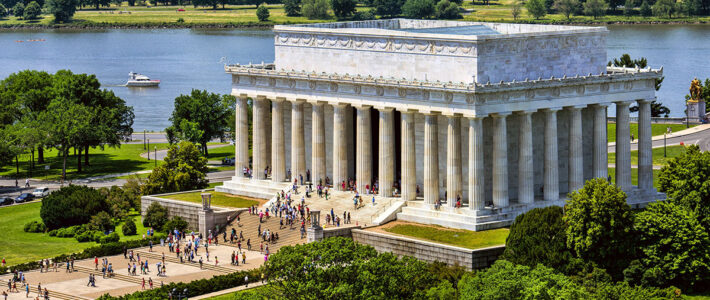
12. We are particularly concerned with the National Mall and its monuments and the importance of federal and city oversight, as well as public involvement, in security design for the Mall. However, the Security Report appears to relinquish oversight over certain projects on the Mall, and this is of concern to us. For example, the Report includes proposed designs for the Lincoln and Jefferson Memorials, but none for the Washington Monument, apparently because, as it states on p. 41 “a security plan is currently under development.” The Security Plan, however, should not have omitted or exempted the Monument from the framework, in essence leaving the National Park Service to its own discretion in designing security for this unique national monument at the heart of the city and the Mall. The NCPC should ask its architectural consultants to draw up additional designs for the Washington Monument grounds.
There is additional reason the Plan should include design guidelines for the Washington Monument. As we are all acutely aware, there is considerable public controversy concerning the National Park Service’s proposed tunnels and walls for the Washington Monument. Serious public safety and engineering problems could scuttle the NPS’s plans. If that happens, NCPC would need to have prepared design guidelines for the Monument that are compatible with the overall Security Plan.
We are also concerned that the NCPC is backing off of oversight with regard to other National Park Service projects on and adjacent to the Mall, notably the Jefferson and Lincoln Memorials. This is a mistake, in our opinion. The National Mall is an integral part of the L’Enfant Plan and the heart of the Nation’s Capital. If anything, there should be greater scrutiny, not less, for plans for the national monuments and the Mall’s open parkland. NCPC gives as a reason that the NPS is moving quickly to guard the monuments. But why is the Lincoln Memorial more of an emergency than, say, the State Department with its hundreds of employees? If NCPC backs away from the guidelines, changes could result in the designs that undermine the entire Plan and leave the Mall a hodge-podge of designs.
Already the NPS has made significant and drastic changes at the Jefferson and Lincoln Memorials. The design guidelines proposed in the Security Plan for these memorials appear to be sensitive and unobtrusive. The latest plan at the Jefferson –presented by NPS in July before the CFA – is totally different. The NPS would close completely the parking area; instead of a low wall consistent with the Jefferson’s existing landscape, the NPS now proposes rows of bollards. At the Lincoln Memorial, NPS is proposing a proliferation bollards extending down to the Reflecting Pool – not uniform, but bollards of different types, colors, and materials. There’s nothing wrong with bollards – they can be a better solution than other measures. But at the Jefferson they would replace the perfectly good and preferable solution proposed in the Security Report.
These developments suggest that instead of pulling back on oversight, the NCPC should engage NPS directly in working on designs consistent with the best principles outlined in the Security Plan. The Plan – and the process -- cannot work if NCPC starts exempting projects from the guidelines.
13. Contrary to what the Report says, oversight will still be needed on the Mall, even after the Washington, Lincoln, and Jefferson memorials are fortified. On p. 41 the Report states that “the National Park Service has determined that no additional physical perimeter security is deemed necessary at this time for the other monuments and memorials located on the Mall or in West Potomac Park.” How can that be true? The WWII Memorial, now under construction at 17th Street, includes a wide and long ramp stretching from 17th Street deep into the memorial plaza. More than any other memorial on the Mall, this memorial design is an invitation to accidental or intentional death and destruction. As a simple matter of public safety, it will need a long row of bollards or walls stretching across its hundreds of feet of open ramp. If bollards are to be avoided at the Washington Monument – as NCPC and NPS say – how will the WWII Memorial directly across 17th Street be secured?
14. The NCPC would only weaken its own planning authority by deferring to the NPS or any other agency. Worse, it would weaken the Security Plan in the eyes of all the government agencies. If one agency can bypass the Plan, why not others?
15. Finally, how will NCPC enforce the Plan? The review process needs to be strengthened and public input increased. We urge NCPC not to adopt the Plan or send it to the President until there is further discussion of questions about the framework’s design principles. In addition, we ask that NCPC commit itself to holding all city and federal agencies to the framework, with no exceptions.
Back to the top
|