A public failure of monumental scale
Dear Coalition Friends:
In today's Washington Post, Philip Kennicott perfectly captures what we've encountered ever since creation of the National Coalition to Save Our Mall ten years ago.
His commentary is about Monday night's public scoping meeting for Washington Monument security screening. The headline in the print edition of the Post sums it up:
People often ask me how the public process works. Are official decisions pre-made? How do we as Americans plan the future of this grand landscape, at once symbol of American democracy, stage for public activities, legacy to our children and grandchildren? Kennicott's piece is one peek into the "public process" for National Mall planning.
Please take a moment to keep the discussion alive by visiting author Philip Kennicott's blog on this topic.
# # #
THE WASHINGTON POST
By Philip Kennicott
Washington Post Staff Writer
Wednesday, November 10, 2010; C03
What was the mood in the room Monday night, when the National Park Service solicited public input on major changes to the security design of the Washington Monument? Impossible to say.
Although the meeting was well attended, Park Service officials announced that audience participation would be limited to a "workshop" format, with no opportunity for public questions or comment at the microphone. Several members of the audience, who came expecting a chance to submit input on the record about changes to how monument visitors would be screened before entry, vigorously protested the format, but officials refused to open the floor for comment.
"I've been asked to really push the workshop format," Timothy Canan told the crowd after several audience members raised their hands and asked to address the meeting. Canan, a planner with Louis Berger, an architecture and engineering consulting firm, led the meeting for the Park Service. Much of the official presentation was devoted to a technical explanation of the legal process for environmental and historic review -- which mandates public comment -- but involved no actual time for on-the-record public discussion. Instead the audience members were told they might address Park Service employees privately after a informational presentation on the design options under consideration.
No transcript of the meeting was created and Park Service official Stephen Lorenzetti said that the only way for public comments to be officially registered is online, via mail or on preprinted forms.
That angered several participants who braved rush-hour traffic to attend the meeting, and it calls into question the effectiveness and perhaps the sincerity of the Park Service's solicitation of public opinion on one of the most visible changes to the Mall currently under consideration.
"The public process tonight is just checking off the box that they held a meeting," said Robert Hershey, an independent engineering consultant, who came to express his view that the Park Service should hold off on major changes to the monument until the latest security worries abate.
The evening meeting, which was criticized by local online discussion groups because it was at Park Service regional headquarters at Hains Point, far from public transportation, also included a presentation from architect Hany Hassan of Beyer Blinder Belle. Hassan walked the audience through five plans, including building a permanent glass pavilion at the base of obelisk, and sculpting out a new underground door and atrium.
Afterward, members of the public were asked to break into groups and approach Park Service personnel to comment. But there were no signs of the usual "workshop" tools in evidence, no flip charts or blank paper or markers. No one kept a record of ideas or asked questions of the groups, which dissolved into a handful of people milling around poster boards showing watercolors of the proposed changes.
"This is a done deal," said Judy Feldman of the National Coalition to Save Our Mall. Feldman is a regular at public meetings about the Mall, and has been a vocal critic of the National Park Service in the past.
Public meetings are more art than science, but the Park Service's workshop bore little resemblance to established formats for public participation or engagement, especially those developed by architects and urban planners. In other cases, audiences are often broken into small groups, but these groups then report back to the meeting as a whole. Ideas and comments are recorded, and facilitators engage in extensive back-and-forth with group participants.
But there was considerable confusion even among NPS representatives at the meeting about how public comment would be solicited in the future. Deputy Superintendent Lorenzetti said his facilitators had been told not to take notes so as not to misrepresent public opinion. Maria Burks, acting NPS superintendent for the Mall, said other meetings might occur when open comment would be allowed and recorded but Lorenzetti disputed that, saying the NPS uses only the off-the-record workshop format and wouldn't hold a meeting in which the public could address officials in an open forum.
Park Service spokesman Bill Line said that the confusion resulted from Burks's recent arrival as acting superintendent and that the Park Service intends to accept only written comment.
"They don't have to write a dissertation," Line said. "But we want people to tell us why . . . they prefer or embrace or dislike any of the options."
The issue of public comment is particularly sensitive given the iconic status of the Washington Monument. Images from the 19th century, shown at the meeting, reveal the extensive foundation reenforcement -- a giant disk of underground concrete -- added to the structure in the 1870s to keep it stable. One audience member, Dana Dalrymple, came with a detailed, heavily footnoted survey of the history of the monument's foundations, engineering and design.
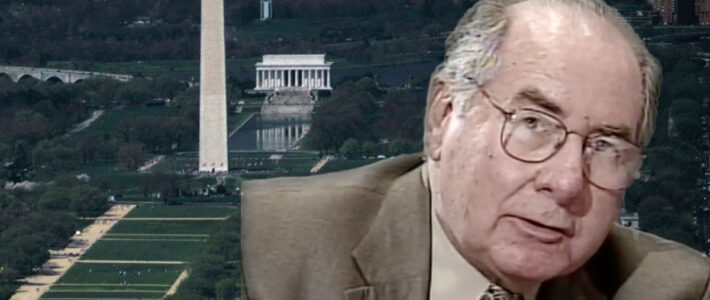
"A number of the proposals call for changes to the foundations just where I think it would be pretty dicey," said Dalrymple, who is an agricultural economist, not an engineer. But he was one of several passionate audience members who have been following the issue for years.
Public meetings on security issues are particularly difficult to manage. "Revealing security information is a pathway to allowing someone to figure out how to circumvent security," said Line in an interview before Monday's meeting.
Which makes the stakes of public meetings devoted to security extraordinarily high. The public is being asked both to trust officials on security matters that they can't discuss, and to trust the same officials who assure the public that its input is being seriously considered. NPS officials stress that they are interested in public input, and Burks said the workshop format was intended to empower "shy" members of the audience who might be intimidated by speaking to the group. But the rules of the NPS workshop format make it more effective for the public to stay home and send online commentary than to devote the early-evening hours to attending a public forum.
It was a discouraging spectacle. After standing around and speaking mostly with one another, people drifted away. And the decision making process was left where it had been at the beginning of the evening: lacking transparency, dialogue or any assurance that the NPS, which may be good at soliciting opinion, is interested in listening to it.
# # #
And from Kennicott's blog:
“The trouble with socialism is it takes too many evenings.” And the trouble with democracy, as practiced by the National Park Service, is that those evenings aren’t worth the bother.
On Monday I drove out to a dark and inaccessible patch of East Potomac Park to attend the NPS public meeting on the security designs for the Washington Monument. I saw taxis and zip cars pulling up because, of course, there was no access to mass transit. It was rush hour and the bridges were jammed.
But the room was full, and people clearly were passionately engaged with how–and whether–the grounds of the Washington Monument will be redesigned to accommodate a magnetometer screening facility. Much of the official presentation was a perfunctory walk through of the legal parameters for public comment. After architect Hany Hassan spoke the Park Service announced that despite the efforts of several audience members to ask questions and make comments at the microphone, the public was very definitely NOT going to be heard except in what the NPS called a “workshop” format.
And what is an NPS workshop? Do you imagine, say, experienced moderators with flips charts, soliciting, clarifying and recording audience ideas? A report back to the whole meeting at the end, with each group sharing its insights? Dialogue? NPS officials making a list of ideas, repeating them back to the audience in a way that assures people they have been heard? A clear statement of how those ideas will be incorporated and used during the decision-making process? An invitation to a regularly scheduled, accessible next meeting, with a clear agenda for future installments of the “workshop” process?
No. The NPS employees didn’t even bother to take notes–and were, in fact, told not to take notes. There were no formal workshop procedures, and the “groups” they asked the audience to join weren’t even given designated places to sit and engage. Instead, people milled around, then left.
It was a farce. The best you can say of this process is that the NPS is incompetent at public engagement and workshops. But I fear it is much worse than that, the process is designed to thwart any chance of a public back and forth between the audience and the NPS. They didn’t even keep a transcript of the meeting. What’s the point of coming out?
We live in a busy, complicated democracy. People don’t give up two hours of their evening easily unless they are very committed to a cause. If you call a public meeting, then use it to thwart the very reasons that people come out and engage–the right and the opportunity to be heard–you are abusing the public and the public trust. The NPS should be ashamed of this kind of event, and they should change their policies to institute a clear, meaningful and effective platform for true public engagement.
If there's one UPDATE you need to read, this is it...
In today's Washington Post, Philip Kennicott perfectly captures what we've encountered ever since creation of the National Coalition to Save Our Mall ten years ago.
His commentary is about Monday night's public scoping meeting for Washington Monument security screening. The headline in the print edition of the Post sums it up:
"A public failure of monumental scale. Just for the record, Park Service hasn't listened to the people."
People often ask me how the public process works. Are official decisions pre-made? How do we as Americans plan the future of this grand landscape, at once symbol of American democracy, stage for public activities, legacy to our children and grandchildren? Kennicott's piece is one peek into the "public process" for National Mall planning.
Please take a moment to keep the discussion alive by visiting author Philip Kennicott's blog on this topic.
# # #
THE WASHINGTON POST
Commentary: Washington Monument security plan didn't allow for public opinion
By Philip Kennicott
Washington Post Staff Writer
Wednesday, November 10, 2010; C03
What was the mood in the room Monday night, when the National Park Service solicited public input on major changes to the security design of the Washington Monument? Impossible to say.
Although the meeting was well attended, Park Service officials announced that audience participation would be limited to a "workshop" format, with no opportunity for public questions or comment at the microphone. Several members of the audience, who came expecting a chance to submit input on the record about changes to how monument visitors would be screened before entry, vigorously protested the format, but officials refused to open the floor for comment.
"I've been asked to really push the workshop format," Timothy Canan told the crowd after several audience members raised their hands and asked to address the meeting. Canan, a planner with Louis Berger, an architecture and engineering consulting firm, led the meeting for the Park Service. Much of the official presentation was devoted to a technical explanation of the legal process for environmental and historic review -- which mandates public comment -- but involved no actual time for on-the-record public discussion. Instead the audience members were told they might address Park Service employees privately after a informational presentation on the design options under consideration.
No transcript of the meeting was created and Park Service official Stephen Lorenzetti said that the only way for public comments to be officially registered is online, via mail or on preprinted forms.
That angered several participants who braved rush-hour traffic to attend the meeting, and it calls into question the effectiveness and perhaps the sincerity of the Park Service's solicitation of public opinion on one of the most visible changes to the Mall currently under consideration.
"The public process tonight is just checking off the box that they held a meeting," said Robert Hershey, an independent engineering consultant, who came to express his view that the Park Service should hold off on major changes to the monument until the latest security worries abate.
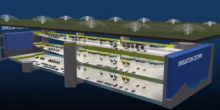
The evening meeting, which was criticized by local online discussion groups because it was at Park Service regional headquarters at Hains Point, far from public transportation, also included a presentation from architect Hany Hassan of Beyer Blinder Belle. Hassan walked the audience through five plans, including building a permanent glass pavilion at the base of obelisk, and sculpting out a new underground door and atrium.
Afterward, members of the public were asked to break into groups and approach Park Service personnel to comment. But there were no signs of the usual "workshop" tools in evidence, no flip charts or blank paper or markers. No one kept a record of ideas or asked questions of the groups, which dissolved into a handful of people milling around poster boards showing watercolors of the proposed changes.
"This is a done deal," said Judy Feldman of the National Coalition to Save Our Mall. Feldman is a regular at public meetings about the Mall, and has been a vocal critic of the National Park Service in the past.
Public meetings are more art than science, but the Park Service's workshop bore little resemblance to established formats for public participation or engagement, especially those developed by architects and urban planners. In other cases, audiences are often broken into small groups, but these groups then report back to the meeting as a whole. Ideas and comments are recorded, and facilitators engage in extensive back-and-forth with group participants.
But there was considerable confusion even among NPS representatives at the meeting about how public comment would be solicited in the future. Deputy Superintendent Lorenzetti said his facilitators had been told not to take notes so as not to misrepresent public opinion. Maria Burks, acting NPS superintendent for the Mall, said other meetings might occur when open comment would be allowed and recorded but Lorenzetti disputed that, saying the NPS uses only the off-the-record workshop format and wouldn't hold a meeting in which the public could address officials in an open forum.
Park Service spokesman Bill Line said that the confusion resulted from Burks's recent arrival as acting superintendent and that the Park Service intends to accept only written comment.
"They don't have to write a dissertation," Line said. "But we want people to tell us why . . . they prefer or embrace or dislike any of the options."
The issue of public comment is particularly sensitive given the iconic status of the Washington Monument. Images from the 19th century, shown at the meeting, reveal the extensive foundation reenforcement -- a giant disk of underground concrete -- added to the structure in the 1870s to keep it stable. One audience member, Dana Dalrymple, came with a detailed, heavily footnoted survey of the history of the monument's foundations, engineering and design.
"A number of the proposals call for changes to the foundations just where I think it would be pretty dicey," said Dalrymple, who is an agricultural economist, not an engineer. But he was one of several passionate audience members who have been following the issue for years.
Public meetings on security issues are particularly difficult to manage. "Revealing security information is a pathway to allowing someone to figure out how to circumvent security," said Line in an interview before Monday's meeting.
Which makes the stakes of public meetings devoted to security extraordinarily high. The public is being asked both to trust officials on security matters that they can't discuss, and to trust the same officials who assure the public that its input is being seriously considered. NPS officials stress that they are interested in public input, and Burks said the workshop format was intended to empower "shy" members of the audience who might be intimidated by speaking to the group. But the rules of the NPS workshop format make it more effective for the public to stay home and send online commentary than to devote the early-evening hours to attending a public forum.
It was a discouraging spectacle. After standing around and speaking mostly with one another, people drifted away. And the decision making process was left where it had been at the beginning of the evening: lacking transparency, dialogue or any assurance that the NPS, which may be good at soliciting opinion, is interested in listening to it.
# # #
And from Kennicott's blog:
The National Park Service “Workshop”
“The trouble with socialism is it takes too many evenings.” And the trouble with democracy, as practiced by the National Park Service, is that those evenings aren’t worth the bother.
On Monday I drove out to a dark and inaccessible patch of East Potomac Park to attend the NPS public meeting on the security designs for the Washington Monument. I saw taxis and zip cars pulling up because, of course, there was no access to mass transit. It was rush hour and the bridges were jammed.
But the room was full, and people clearly were passionately engaged with how–and whether–the grounds of the Washington Monument will be redesigned to accommodate a magnetometer screening facility. Much of the official presentation was a perfunctory walk through of the legal parameters for public comment. After architect Hany Hassan spoke the Park Service announced that despite the efforts of several audience members to ask questions and make comments at the microphone, the public was very definitely NOT going to be heard except in what the NPS called a “workshop” format.
And what is an NPS workshop? Do you imagine, say, experienced moderators with flips charts, soliciting, clarifying and recording audience ideas? A report back to the whole meeting at the end, with each group sharing its insights? Dialogue? NPS officials making a list of ideas, repeating them back to the audience in a way that assures people they have been heard? A clear statement of how those ideas will be incorporated and used during the decision-making process? An invitation to a regularly scheduled, accessible next meeting, with a clear agenda for future installments of the “workshop” process?
No. The NPS employees didn’t even bother to take notes–and were, in fact, told not to take notes. There were no formal workshop procedures, and the “groups” they asked the audience to join weren’t even given designated places to sit and engage. Instead, people milled around, then left.
It was a farce. The best you can say of this process is that the NPS is incompetent at public engagement and workshops. But I fear it is much worse than that, the process is designed to thwart any chance of a public back and forth between the audience and the NPS. They didn’t even keep a transcript of the meeting. What’s the point of coming out?
We live in a busy, complicated democracy. People don’t give up two hours of their evening easily unless they are very committed to a cause. If you call a public meeting, then use it to thwart the very reasons that people come out and engage–the right and the opportunity to be heard–you are abusing the public and the public trust. The NPS should be ashamed of this kind of event, and they should change their policies to institute a clear, meaningful and effective platform for true public engagement.